Children’s First Dental Visit Guide for Parents

A child’s first dental visit is an important step towards building healthy oral habits for life. Many parents in Kerala wait until their child has tooth pain or visible cavities before visiting a dentist. But early dental checkups can help prevent problems before they become serious.
In this guide, we’ll explain when your child should first visit a dentist, what happens during the appointment, how parents can prepare children, and why early dental care matters.
When Should a Child First Visit the Dentist?
Most pediatric dentists recommend a child’s first dental visit by the age of one, or within six months after the first tooth appears.
Many parents think baby teeth are not important because they eventually fall out. But baby teeth play a major role in:
Proper chewing and nutrition
Speech development
Jaw growth
Guiding permanent teeth into the correct position
Ignoring dental care during childhood can lead to cavities, infections, pain, and future alignment problems.
Signs Your Child Needs a Dental Visit Early
Even if your child is very young, certain signs should not be ignored.
Parents should consult a dentist if they notice:
White or brown spots on teeth
Tooth sensitivity
Bad breath that does not go away
Swollen or bleeding gums
Difficulty chewing food
Thumb sucking beyond early childhood
Delayed tooth eruption
Tooth pain or crying while eating
In Kerala, children often consume sweet snacks, chocolates, biscuits, packaged juices, and sweetened milk frequently. These habits can increase the risk of early childhood cavities.
Why Early Dental Visits Are Important
1. Prevents Fear of Dentists
Children who visit the dentist early usually become more comfortable with dental treatments. If the first visit happens only during severe pain, children may develop fear and anxiety about dental clinics.
2. Detects Problems Early
Dentists can identify:
Early cavities
Bite problems
Gum issues
Improper brushing habits
Teeth grinding
Jaw growth concerns
Early treatment is usually simpler and less painful.
3. Helps Parents Learn Proper Dental Care
The first visit is not only for the child. Parents also receive guidance about:
Brushing techniques
Toothpaste selection
Feeding habits
Bottle-feeding risks
Pacifier and thumb-sucking habits
Diet recommendations
How to Prepare Your Child for the First Dental Visit
The way parents introduce dental visits can greatly affect a child’s experience.
Keep It Positive
Avoid saying things like:
“Don’t worry, it won’t hurt.”
“The doctor won’t give injections.”
These statements may create fear even before entering the clinic.
Instead, say:
“The dentist will count your teeth.”
“The doctor will help keep your smile healthy.”
Choose the Right Appointment Time
Schedule the visit when your child is active and well-rested. Morning appointments usually work best for younger children.
Read Books or Show Videos
Simple storybooks or cartoons about dental visits can help children feel familiar with the environment.
Bring Comfort Items
A favorite toy or blanket can help nervous children feel relaxed.
What Happens During the First Dental Visit?
The first appointment is usually simple, gentle, and short.
The dentist may:
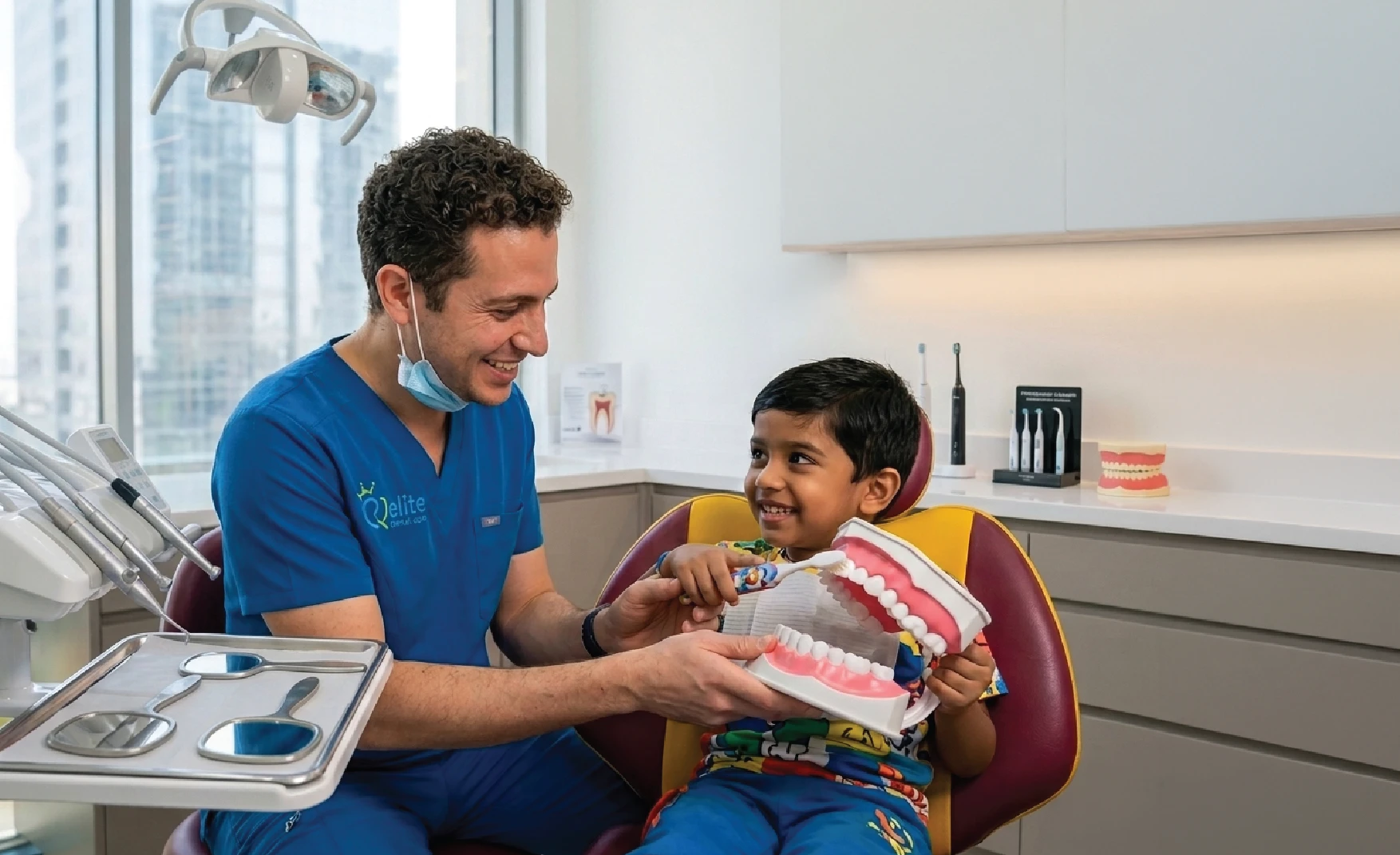
Examine the child’s teeth and gums
Check jaw and bite development
Look for cavities or plaque buildup
Clean the teeth if necessary
Demonstrate proper brushing methods
Discuss diet and oral habits with parents
Some children may sit on the parent’s lap during the examination to feel more secure.
Common Dental Problems Seen in Children
Early Childhood Cavities
One of the most common dental issues among children is tooth decay caused by sugary foods and poor brushing habits.
Thumb Sucking
Thumb sucking beyond the age of 4-5 years can affect teeth alignment and jaw development.
Bottle Feeding at Night
Sleeping with milk bottles can lead to “baby bottle tooth decay,” especially when children sleep without cleaning their teeth afterward.
Misaligned Teeth
Some children may show early signs of crowding or bite issues that need monitoring.
Tips for Maintaining Healthy Teeth in Children
Parents can help children maintain good oral health by following simple habits:
Brush twice daily using fluoride toothpaste
Limit sugary snacks and soft drinks
Encourage drinking water after meals
Avoid frequent chocolates and sticky candies
Replace toothbrushes every 3 months
Schedule regular dental checkups every 6 months
Healthy dental habits started during childhood often continue into adulthood.
How Often Should Children Visit the Dentist?
Most children should visit the dentist every six months for routine checkups and cleaning.
However, children with:
frequent cavities,
braces,
thumb-sucking habits,
or gum issues
May require more frequent visits depending on the dentist’s advice.